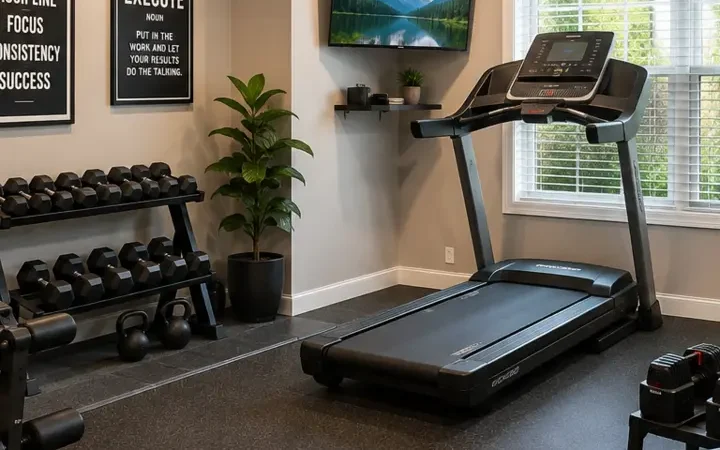
Building a high-performance home gym is about more than filling a spare room with exercise equipment. The best home gym design supports your fitness goals, fits the available space, and makes it easier to maintain a consistent workout routine.
A home gym can be created in a garage, basement, spare bedroom, studio, or dedicated fitness room. Whether your priorities include strength training, cardiovascular exercise, guided workouts, flexibility, or recovery, the room should be planned around the way you actually train.
By combining the right strength and cardio equipment, modular training systems, smart fitness technology, flooring, and recovery essentials, you can create a personalized workout space that provides the convenience and performance of a commercial gym at home.
Strength Training and Cardio Equipment
Strength training and cardio equipment form the foundation of most home gym setups. The right combination depends on your fitness goals, available floor space, ceiling height, and preferred style of exercise.
For strength training, a power rack or squat cage can support squats, bench presses, pull-ups, and other compound movements. An adjustable weight bench increases the number of exercises that can be performed with dumbbells, barbells, or cable systems.
Functional trainers and cable machines offer a wide range of movements within a relatively compact footprint. Adjustable pulleys allow users to perform upper-body, lower-body, and core exercises from multiple angles. Free weights, kettlebells, resistance bands, and medicine balls can add even more variety without requiring large machines.
Cardio machines provide convenient options for endurance training and calorie-burning workouts. Premium treadmills remain popular for walking, jogging, and running. Exercise bikes provide a lower-impact cardiovascular option, while rowing machines combine cardio with a full-body movement.
Cross-trainers and ellipticals can reduce impact on the joints while still providing a challenging workout. The best cardio machine is not necessarily the one with the most features. It is the machine that matches your preferred exercise style and will be used consistently.
Before buying home gym equipment, measure the space required for both the machine and the person using it. Allow room for doors, pedals, handles, moving belts, and safe access around every piece of equipment.
Specialized Modular Home Gyms
Specialized modular home gyms are designed to provide several exercise stations within one coordinated system. They can be especially valuable when homeowners want commercial-style training options without filling the room with separate machines.
A modular home gym may combine adjustable cables, weight stacks, pull-up stations, squat racks, storage, and attachment points. Some systems can be expanded over time by adding components such as dip handles, landmine attachments, leg developers, cable accessories, or additional storage.
Wall-mounted fitness systems can conserve floor space and may fold inward when they are not being used. Compact all-in-one home gyms are another option for smaller rooms, apartments, and multipurpose spaces.
Serious strength-training spaces may include separate zones for free weights, cable exercises, and mobility work. Olympic lifting areas require sufficient ceiling clearance and durable flooring that can help protect both the equipment and the underlying surface.
When comparing modular home gym systems, consider the types of exercises supported, available resistance, adjustment range, attachment compatibility, and space needed to move safely. A system should support your current routine while leaving room for your training needs to develop.
Good equipment placement is also important. Frequently used accessories should be easy to reach, while weight plates, bars, and attachments should have designated storage. An organized home gym is safer, more efficient, and more inviting to use.
Smart Fitness and Interactive Technology
Smart home gym equipment has changed the way people train at home. Interactive fitness technology can provide guided workouts, performance tracking, virtual coaching, and entertainment within the workout space.
Connected treadmills, exercise bikes, rowing machines, and strength-training systems can display live or on-demand classes. Many systems track information such as workout duration, distance, pace, heart rate, resistance, repetitions, and estimated energy use.
Smart mirrors and interactive fitness displays can deliver instructor-led strength, cardio, yoga, boxing, and mobility sessions without requiring a large television or separate training area. Digital weight systems may automatically adjust resistance and record progress during each exercise.
Wearable fitness trackers and heart-rate monitors can connect with compatible equipment and apps, giving users a more complete view of their workouts. A wall-mounted television, tablet station, or media console can also support training videos, music, and virtual classes.
Strong Wi-Fi coverage and accessible electrical outlets are important when planning a connected home gym. Charging stations and cable management can keep devices ready while preventing loose cords from crossing workout areas.
Smart fitness technology should make exercise easier to follow and measure. Choose features that support your goals rather than paying for complicated functions that are unlikely to be used.
Flooring, Recovery, and Studio Essentials
Home gym flooring protects the room, reduces noise, improves traction, and provides a stable surface for exercise equipment. The right flooring depends on the type and intensity of the workouts being performed.
Interlocking rubber gym tiles are a popular choice because damaged sections can be replaced individually. Rolled rubber flooring creates a more continuous appearance and works well in larger dedicated fitness rooms. Thicker sound-dampening platform mats can provide added protection beneath power racks, weight benches, and heavy lifting areas.
A yoga or studio zone may use a slightly softer surface for stretching, mobility exercises, and bodyweight workouts. Full-length wall mirrors help users check positioning and movement while making a smaller home gym feel more open.
Recovery equipment can make the room useful before and after a workout. Foam rollers, massage devices, stretching straps, and mobility tools are compact additions that can be stored on wall-mounted organizers or shelving.
Larger recovery features may include an infrared sauna, cold-plunge tub, or hydrotherapy massage bed. These items require additional planning for ventilation, drainage, electrical service, moisture control, and safe access.
Commercial gym fans, air purifiers, and good ventilation can improve comfort during intense workouts. Bright, even lighting helps keep the space safe, while adjustable accent lighting can create a calmer atmosphere for yoga, stretching, or recovery.
Storage should be incorporated into the overall home gym design. Wall-mounted racks, cabinets, shelving, and dedicated organizers can keep dumbbells, mats, bands, towels, and cleaning supplies off the floor and within easy reach.
Planning Your Home Gym Layout
The best home gym ideas begin with a clear plan. Start by identifying your main training goals and the equipment you will use most frequently. Then measure the room and map out separate areas for strength training, cardio, stretching, storage, and recovery.
Maintain clear walkways and enough open space to move safely around each machine. Consider ceiling height for pull-ups, overhead presses, and tall cardio equipment. Doors, windows, mirrors, outlets, and ventilation should also be included in the room plan.
A garage home gym may need additional insulation, climate control, moisture protection, and sound reduction. An upstairs fitness room may require closer attention to flooring, vibration, and equipment weight.
It is not necessary to purchase everything at once. Begin with versatile equipment that supports your core workouts, then expand the space as your routine becomes established.
Bring Your High-Performance Home Gym to Life
A high-performance home gym should make training more convenient, comfortable, and consistent. By selecting dependable strength and cardio equipment, using space-saving modular systems, incorporating helpful smart fitness technology, and planning the flooring and recovery areas carefully, you can create a fitness room tailored to your lifestyle.
The result is more than a collection of workout machines. It is a personalized training environment where you can build strength, improve endurance, recover, and stay focused on your long-term fitness goals—all from the comfort of home.
Build Your Room and start planning a home gym around your available space, workout preferences, and fitness goals.
Your Cave. Your Way.
Man Cave Select