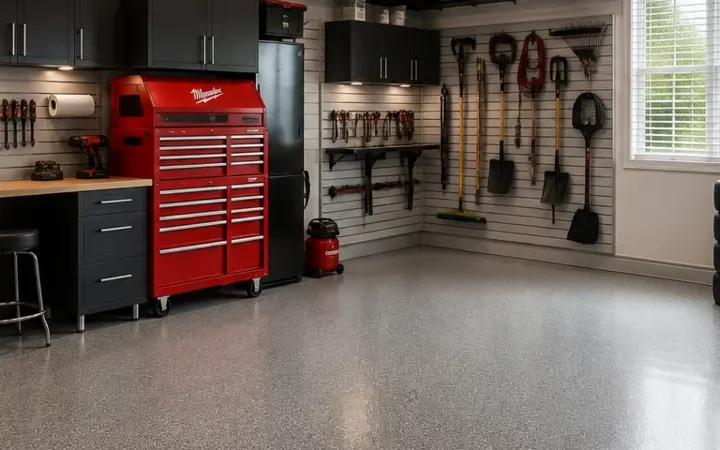
A garage can be much more than a place to park a car or store things that do not fit inside the house. With the right planning, it can become a functional home workshop built around the projects you actually enjoy.
The best garage workshop ideas begin with one question: What kind of work will happen in the space? An automotive enthusiast needs a different layout from a woodworker, and a welding area has different requirements from a home makerspace. Identifying that purpose first makes every later decision—from lighting and power to storage and equipment placement—much easier.
Whether you are planning a complete garage workshop setup or improving one corner of an existing garage, the goal is the same: create a safe, organized space where tools are accessible and projects have room to take shape.
Automotive Garage Setup
A well-planned home mechanic garage gives you room to maintain, repair, and detail vehicles without constantly moving tools and equipment out of the way.
Start by considering the vehicle footprint and the clearance required to open doors, raise the hood, use a floor jack, or work around a lift. A practical automotive garage setup should provide clear walking paths and dedicated locations for frequently used equipment.
Good mechanic garage organization keeps hand tools, diagnostic equipment, fluids, and replacement parts close to the work area. Tool chests and cabinets provide secure garage tool storage, while slatwall panels, pegboards, and wall-mounted racks make use of vertical space.
If you are creating a DIY auto repair garage, think beyond the main workbench. Air compressors, hose reels, battery chargers, shop vacuums, task lighting, and detailing supplies all need permanent locations. Larger items such as a car lift and other shop equipment should be planned before smaller storage is added.
A durable floor, bright lighting, sufficient power, and a logical tool arrangement can make routine maintenance easier while giving the garage a clean, professional appearance.
Woodworking Shop Layout
A woodworking area needs to support the entire process, from storing lumber to cutting, assembling, sanding, and finishing.
An efficient woodworking shop layout places tools in the order they are most likely to be used. Lumber storage should be close to the entrance, cutting tools need adequate material clearance, and the assembly area should remain open enough to handle larger projects.
In a small woodworking shop, mobile bases and folding work surfaces can make a major difference. Tools that are not used every day can be rolled against the wall, leaving the center of the room available when longer boards or larger assemblies need more space.
Useful woodworking workshop ideas include wall-mounted clamps, vertical lumber racks, modular cabinets, and a central workbench that can serve several purposes. A thoughtful home woodshop setup should also include enough electrical outlets to avoid running extension cords across walking paths.
Effective woodworking tool storage keeps blades, bits, measuring tools, and handheld power tools protected but easy to reach. Dust control is equally important. Planning dust collection for woodworking shops helps control sawdust at the source and keeps the workspace cleaner and more comfortable.
Metalworking and Welding Workshop
Metalworking introduces heat, sparks, heavy equipment, and material-handling needs that require careful planning.
A practical metalworking shop layout separates hot work from storage, finishing supplies, and anything combustible. Welding, cutting, and grinding should take place in a clearly defined area with adequate ventilation and appropriate protective equipment.
A home metalworking shop may include a welding table, bench vise, drill press, metal-cutting saw, grinder, air compressor, and storage for raw stock. The layout should provide enough clearance to move long pieces of steel or aluminum without striking walls, vehicles, or other equipment.
A safe welding workshop setup also requires organized cable storage, accessible fire protection, and suitable electrical service for the equipment being used. Creating a dedicated welding and grinding area helps contain sparks and metal debris.
For a broader metal fabrication workshop, think about how material moves through the space—from storage to cutting, shaping, welding, and finishing. Strong benches, heavy-duty shelving, mobile carts, and labeled material racks all contribute to better metal shop organization.
Home Makerspace and Fabrication Workshop
Not every workshop fits into a traditional category. Some people want a flexible place to invent, prototype, repair electronics, create models, or combine several different types of tools.
A home makerspace can bring together 3D printing, CNC equipment, electronics, small-scale fabrication, crafts, and general repair work. It is essentially a modern maker workshop designed for experimentation.
A good DIY makerspace begins with flexible work surfaces and storage that can change as new interests and equipment are added. Small-parts organizers, labeled bins, rolling carts, and adjustable shelving help keep materials visible and accessible.
A home fabrication workshop may include a dedicated 3D printing workspace, a compact CNC workshop setup, and an electronics workbench with task lighting, power supplies, soldering equipment, and storage for components.
This type of inventor workspace should leave room for ideas to evolve. Mobile workstations and modular storage allow the shop to support one project today and something entirely different tomorrow.
Planning the Complete Workshop
Regardless of the type of shop, the strongest home workshop setup combines a practical small workshop layout with good lighting, sufficient power, safe equipment placement, and organized storage.
Useful garage storage ideas include overhead racks for infrequently used items, wall systems for hand tools, enclosed cabinets for supplies, and heavy-duty shelves for larger equipment. Good garage workbench ideas should account for working height, available wall space, task lighting, electrical access, and the type of projects being completed.
The best tool storage and organization system is not necessarily the most expensive. It is the one that allows you to find what you need, use it safely, and return it easily when the work is finished.
Before purchasing cabinets, benches, or large machinery, use the Man Cave Select 3D Room Builder to enter your room dimensions and experiment with different layouts. Planning the room first can help prevent crowded walkways, blocked doors, and equipment that does not fit as expected.
The right DIY workshop ideas depend on what you want to build, repair, or create. Once the workshop is designed around that purpose, the garage becomes more than storage—it becomes a place where projects can actually happen.
Your Cave. Your Way.
Man Cave Select