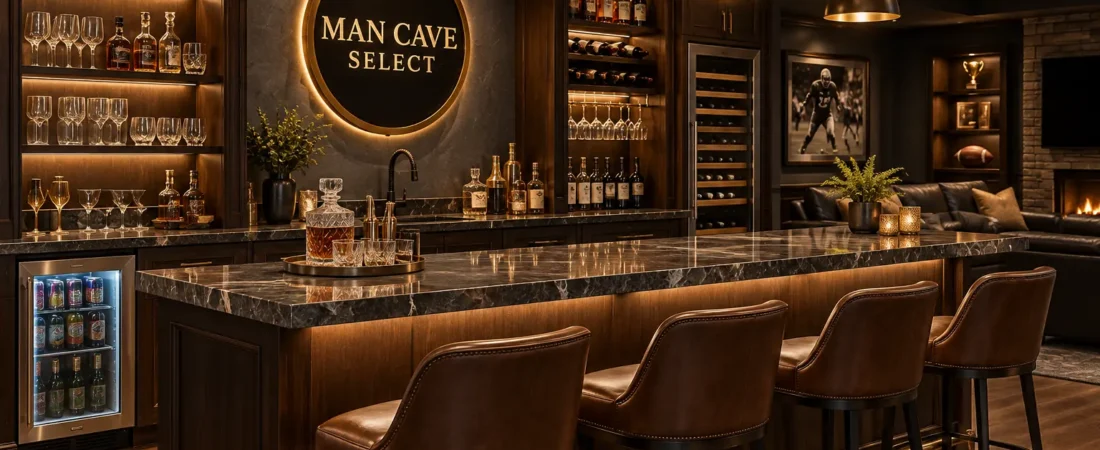
A well-designed home bar gives family and friends a comfortable place to gather without leaving home. It can become the center of game nights, sporting events, celebrations, and relaxed evenings with friends. With the right planning, even a modest corner can become a stylish and functional home entertainment destination.
The best home bar ideas bring together four important elements: a bar and storage system, comfortable seating, dependable beverage equipment, and the accessories and décor that give the room its personality.
Whether you are planning a basement bar, garage bar, game-room bar, or dedicated man cave bar, these four categories will help you build a space that fits your room, entertaining style, and budget.
Home Bars & Bar Cabinets
The bar itself establishes the room’s appearance and determines how drinks, glassware, and supplies will be stored. Home bars are available in many sizes and configurations, making it possible to create a practical serving area in almost any suitable room.
Freestanding home bars provide a complete counter and storage area without requiring permanent construction. They are a good option for finished basements, game rooms, and multipurpose entertainment spaces.
Corner home bars use space efficiently by fitting against two adjoining walls. A modular home bar can be assembled from separate counter, cabinet, shelving, and storage sections, allowing the arrangement to expand or change over time.
Pub-style bars create a traditional neighborhood-bar atmosphere, while custom luxury bars can include stone countertops, detailed woodwork, integrated lighting, sinks, refrigeration, and personalized finishes.
Bar cabinets provide another option when a full bar counter is unnecessary. Liquor cabinets, wine cabinets, glassware cabinets, and back-bar storage keep bottles and serving pieces organized while adding furniture-quality style to the room.
For smaller spaces, rolling bar carts, console bars, hidden bar cabinets, and convertible bar furniture can create a compact serving station without permanently occupying the room.
Before choosing a home bar, measure the available space and consider traffic flow. Allow enough room for cabinet doors, refrigerator doors, bar stools, and people moving behind the seating area.
Bar Stools & Seating
Comfortable bar seating encourages guests to stay, relax, and enjoy the room. The correct seat height is essential, so measure the distance between the floor and the underside of the counter before selecting bar stools.
Counter-height stools are designed for lower counters, while bar-height stools work with taller bar surfaces. Leaving adequate space between each stool prevents guests from feeling crowded.
Swivel bar stools make it easier to enter and leave the seating area. Upholstered stools provide additional comfort for longer gatherings, while backless stools can slide beneath the counter when they are not being used. Adjustable-height stools provide flexibility when a room contains surfaces of different heights.
Sports-themed bar stools can add team colors or game-day character, while leather and wood seating creates a more traditional pub atmosphere. Modern metal and upholstered stools work well in contemporary home bars.
Pub tables and bar table sets can provide additional seating away from the main counter. Round pub tables, counter-height tables, and cocktail tables are useful for serving food, playing games, or creating smaller conversation areas.
If the room has enough space, leather club chairs, compact loveseats, bar benches, or modular lounge seating can create a comfortable viewing area near a television or fireplace.
Beverage Equipment & Refrigeration
The right home bar appliances keep drinks cold and reduce trips to the kitchen. Beverage refrigerators, wine coolers, kegerators, ice makers, sinks, and drink-preparation equipment can turn a basic bar into a complete entertainment station.
A glass-door beverage refrigerator makes it easy to see available drinks while keeping cans and bottles organized. Combination beverage centers can store several types of drinks within one appliance.
Wine enthusiasts may prefer a dedicated wine cooler. Dual-zone wine refrigerators maintain separate temperature areas for different wines, while compact under-counter models can fit directly into a bar cabinet system.
A home kegerator brings draft beer into the man cave. Full-size kegerators can serve larger gatherings, while compact kegerators and mini-keg dispensers work in smaller rooms. Draft beer towers can also be incorporated into a permanent bar counter.
Built-in and countertop ice makers provide a steady supply of ice without relying on the kitchen freezer. A bar sink and faucet make drink preparation and cleanup more convenient, particularly in a frequently used entertainment space.
Drink blenders and automated cocktail machines can complete the preparation area. Before purchasing any appliance, verify its dimensions, ventilation requirements, electrical needs, water connection, drainage, and door clearance.
Bar Accessories & Décor
Bar accessories improve the way the space functions, while home bar décor gives it a distinct identity.
Bartending essentials may include cocktail shakers, strainers, jiggers, bottle openers, mixing spoons, muddlers, ice buckets, tongs, coasters, and cocktail smokers. Keeping these tools together on a tray or inside a dedicated drawer makes the bar easier to use.
Glassware should reflect the drinks commonly served in the room. Whiskey glasses, beer mugs, wine glasses, cocktail glasses, decanters, and serving trays can be displayed on illuminated shelves or stored safely inside glass-front cabinets.
Lighting is one of the most effective ways to create atmosphere. Pendant lights can illuminate the counter, while under-cabinet lighting makes bottles and glassware easier to see. Backlit signs, LED bar signs, and restrained neon lighting can add personality without overpowering the room.
Sports bar décor is a natural fit for a man cave. Framed jerseys, vintage signs, team memorabilia, photographs, and collectible displays can connect the bar to favorite teams and personal interests.
Beer and liquor displays, framed bar artwork, personalized bar signs, and custom wall décor provide additional finishing touches. The strongest home bar designs use a few carefully selected pieces rather than covering every available surface.
Planning the Right Home Bar Layout
Begin your home bar design by deciding how the room will be used. A bar created primarily for watching sports may need television visibility and flexible seating. A cocktail bar may place more emphasis on glassware, preparation space, and lighting. A game-room bar should remain close to the activity without interfering with play.
Measure the room and mark the locations of doors, windows, outlets, plumbing, and walkways. Plan enough clearance behind the bar and around the stools so guests can move comfortably.
Consider storage before purchasing equipment. Bottles, glasses, tools, napkins, snacks, cleaning supplies, and small appliances all need convenient locations. Good storage keeps the countertop open and makes the room appear more organized.
The home bar should also complement the surrounding room. Dark wood and leather can create a traditional pub look, while streamlined cabinets, black metal, glass, and accent lighting produce a more modern appearance.
Bring Your Home Bar Ideas to Life
Building the ultimate home bar does not require copying a commercial bar or purchasing everything at once. Start with the available space and the way you expect to use it. Choose a home bar or cabinet system, add comfortable seating, select the beverage equipment you will actually use, and finish the room with practical accessories and personal décor.
The result can be a comfortable gathering place designed around your home, your interests, and your guests.
The neighborhood’s best bar might be in your man cave.
Build Your Room and start planning a home bar that fits your space and entertaining style.
Your Cave. Your Way.
Man Cave Select